History and pain map
Which side hurts, what movement triggers it and whether there was an injury.
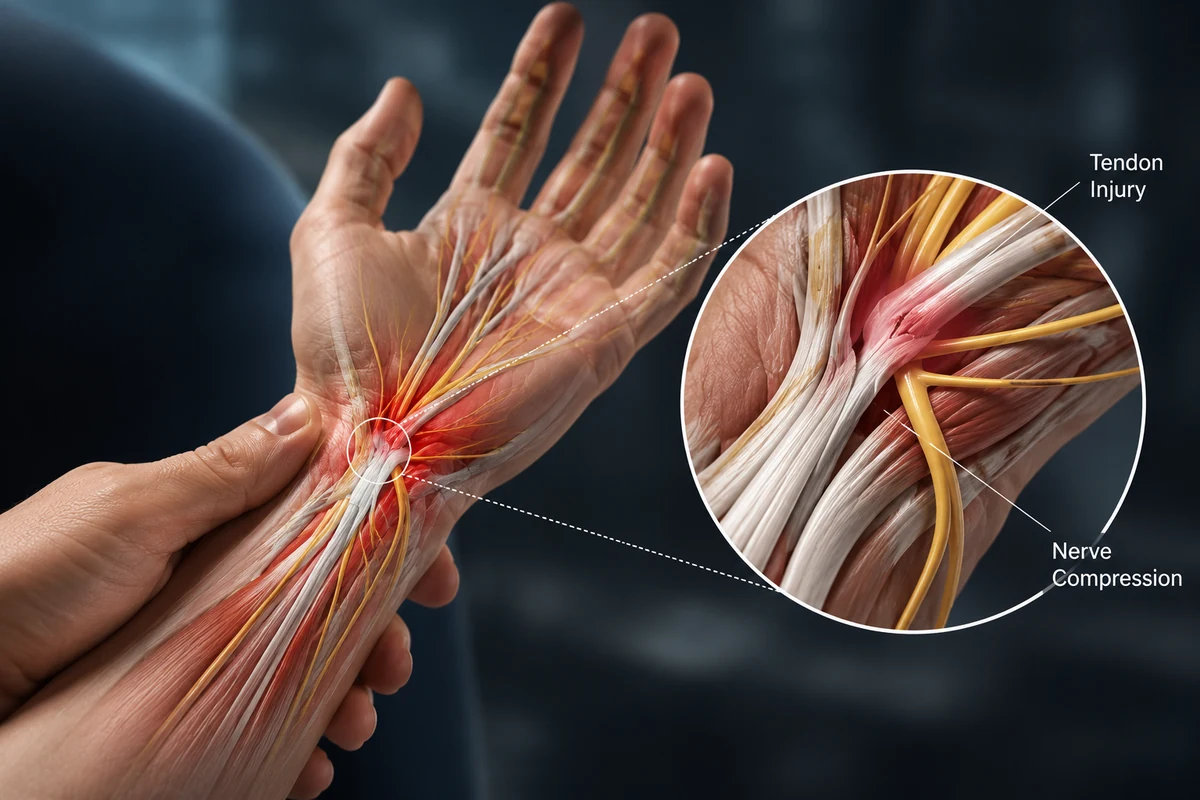
Pain, clicking, stiffness, a new lump or a wrist that feels unstable can arise from very different structures. This guide helps patients find the right starting point—from diagnosis and protection to wrist arthroscopy or reconstruction when needed.
 Ulnar wrist painCentral wrist clickWrist lump
Choose the pattern that sounds closest. This is a navigation guide, not a diagnosis.
This pattern can fit a TFCC problem or another source of ulnar-sided wrist pain. Stability and forearm rotation help distinguish them.
Explore TFCC treatment ↗Each card opens a detailed patient guide covering symptoms, diagnosis, treatment options, surgery when needed and recovery.
 01
01Little-finger-side pain, clicking and pain with rotation.
Explore treatment guide ↗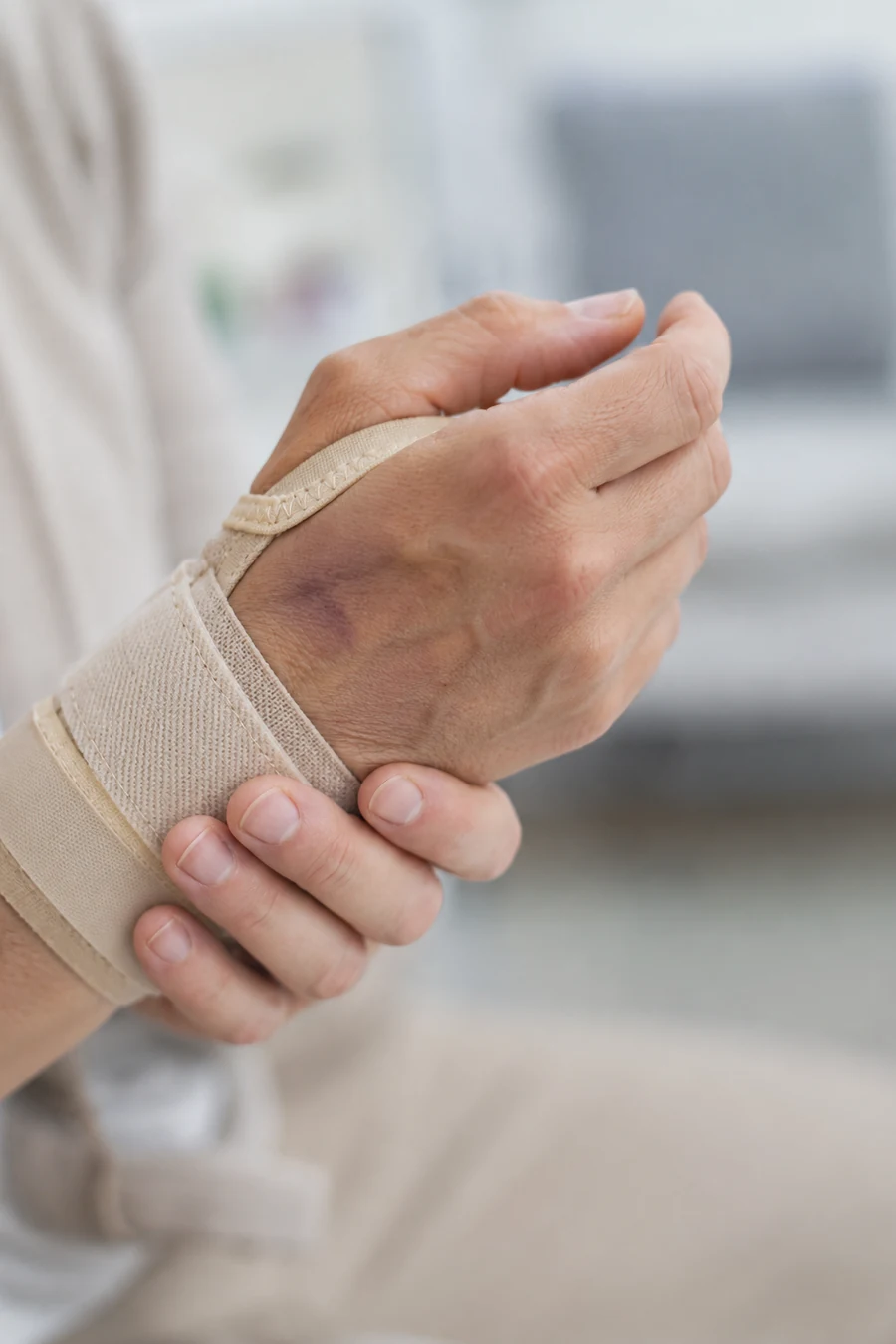 02
02Central wrist pain and instability after a fall or loaded extension.
Explore treatment guide ↗03Persistent pain, swelling or a wrist that feels unreliable after injury.
Explore treatment guide ↗ 04
04A changing wrist lump that may ache, press on nerves or limit loading.
Explore treatment guide ↗ 05
05Pain, stiffness and weakness from cartilage loss or previous injury.
Explore treatment guide ↗ 06
06Loss of blood supply to the lunate causing central wrist pain and collapse.
Explore treatment guide ↗Wrist pain is often difficult because several structures sit close together. A good assessment links the exact location and loading pattern to examination and the right scan.
Which side hurts, what movement triggers it and whether there was an injury.
Rotation, loading, ligament tests and grip are compared.
Alignment, arthritis, fractures and carpal collapse are assessed.
The investigation is chosen according to the suspected structure and treatment decision.
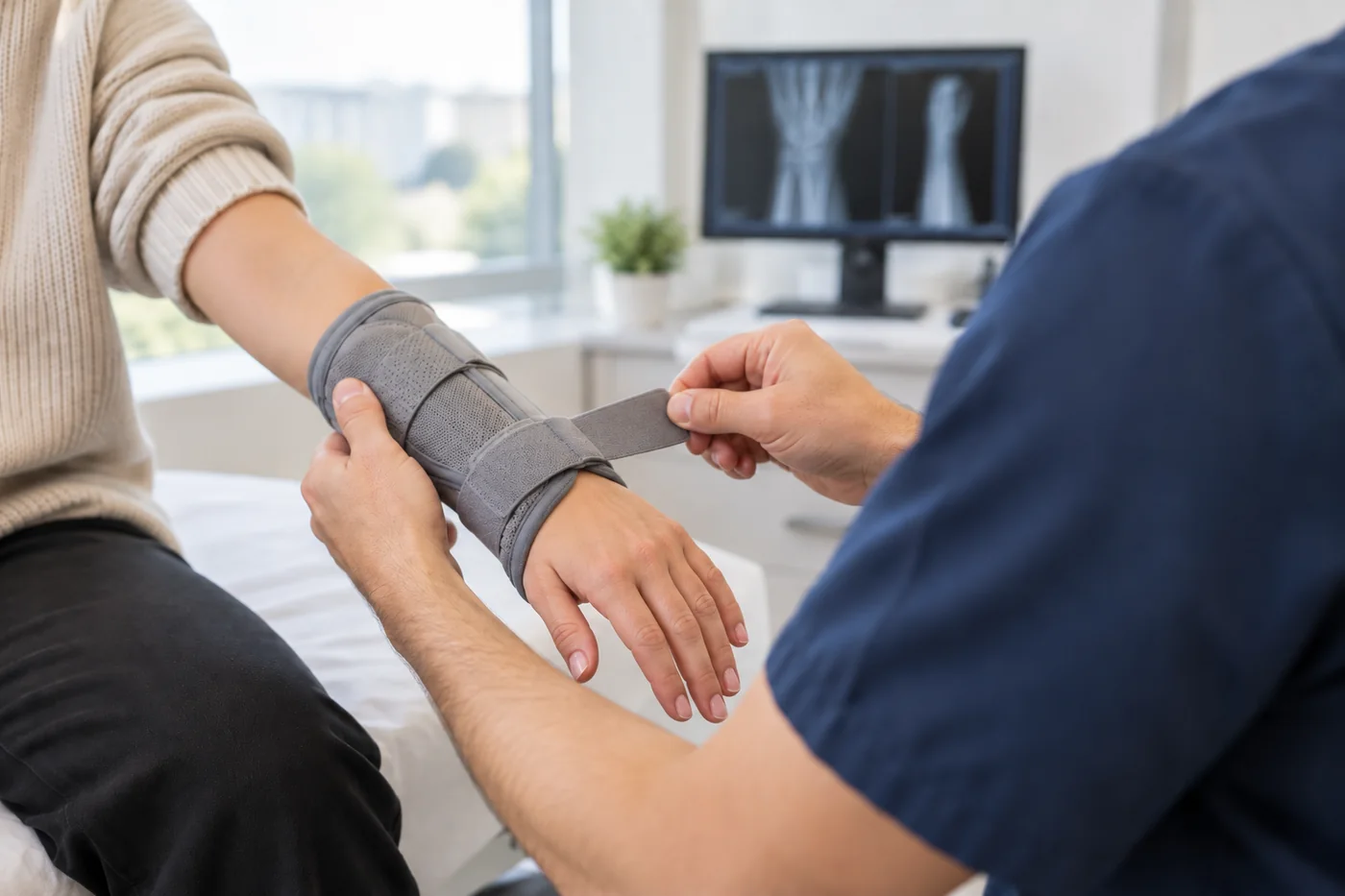
Treatment is matched to stability, cartilage condition, severity, lifestyle and the patient’s goals.
General information only. Diagnosis and treatment should be based on an individual assessment.
Thumb-side, central and little-finger-side pain involve different bones, ligaments, tendons and joints. Location helps narrow the diagnosis.
No. Stable partial injuries may improve with protection and therapy. Surgery is considered when there is proven instability, a repairable major tear or persistent structural symptoms.
MRI is useful but not perfect. Examination, X-rays and sometimes arthroscopy are needed to interpret whether a finding is truly causing symptoms.
A new or changing lump should be assessed if it is painful, firm, hot/red, associated with numbness or not typical of a ganglion.
Yes. Nonsurgical care is usually first, and selected procedures preserve some motion. The best option depends on the exact joints involved.
Arrange a specialist assessment and bring any previous X-rays, MRI scans, reports or braces.