Locking or clicking
Typical of trigger finger or thumb.
Find the right pathway for locking, catching, thumb-side wrist pain, tendon injury or finger deformity—with clear guidance from diagnosis to recovery.
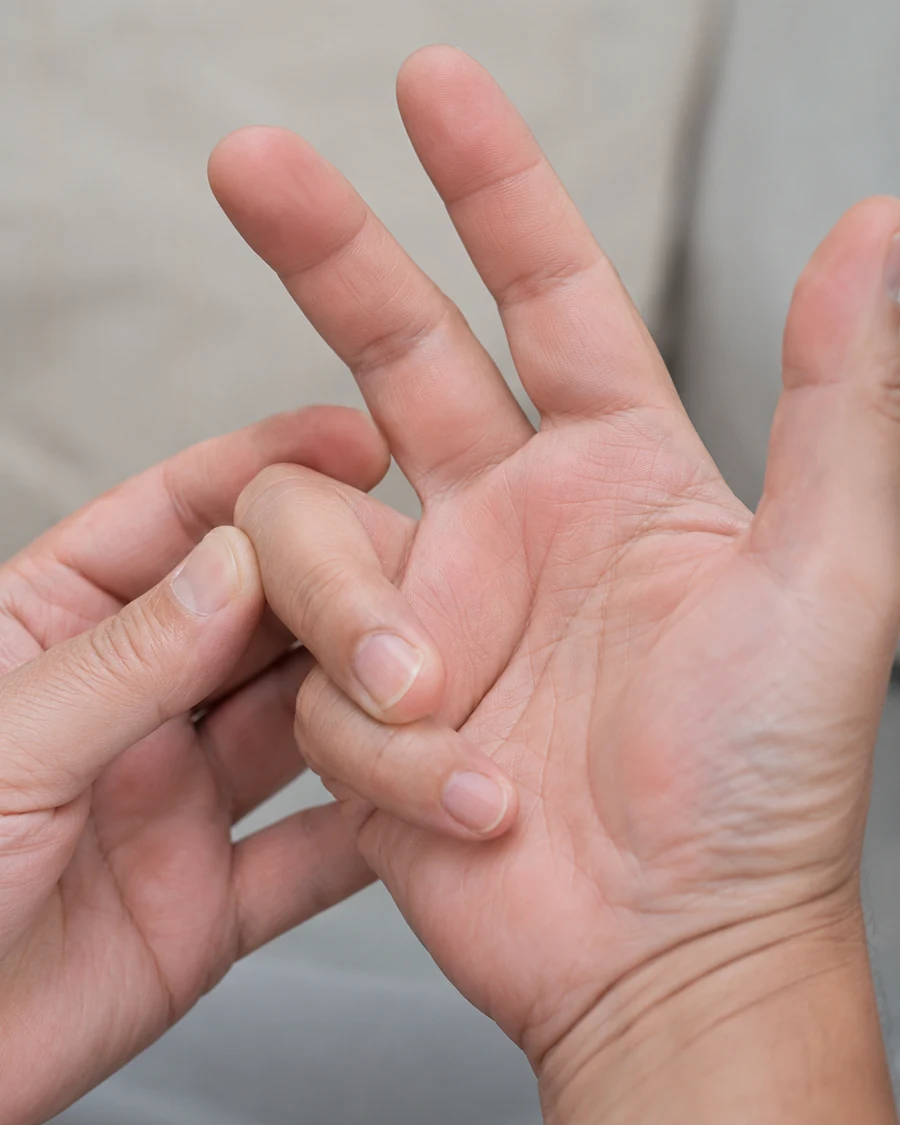
Flexor tendons bend the fingers and thumb; extensor tendons straighten them. Pulley narrowing can cause trigger finger, tendon-sheath irritation can cause De Quervain’s, and cuts or impacts can interrupt movement completely.
This pattern is commonly associated with trigger finger, where the flexor tendon catches at a narrowed pulley near the base of the digit.
Explore trigger finger treatment ↗Symptoms are most useful when matched to the exact movement that is lost, the location of pain and whether there has been a cut, impact or gradual onset.
Typical of trigger finger or thumb.
Often linked to De Quervain’s tendon irritation.
May indicate flexor tendon injury.
May indicate an extensor tendon injury.
A common mallet finger pattern.
Boutonnière posture should be assessed before it becomes fixed.
Each card opens a detailed patient guide covering symptoms, diagnosis, treatment, surgery when appropriate and recovery.
01Painful clicking, catching or locking of a finger or thumb.
Explore treatment guide ↗ 02
02Thumb-side wrist pain aggravated by lifting, gripping and thumb movement.
Explore treatment guide ↗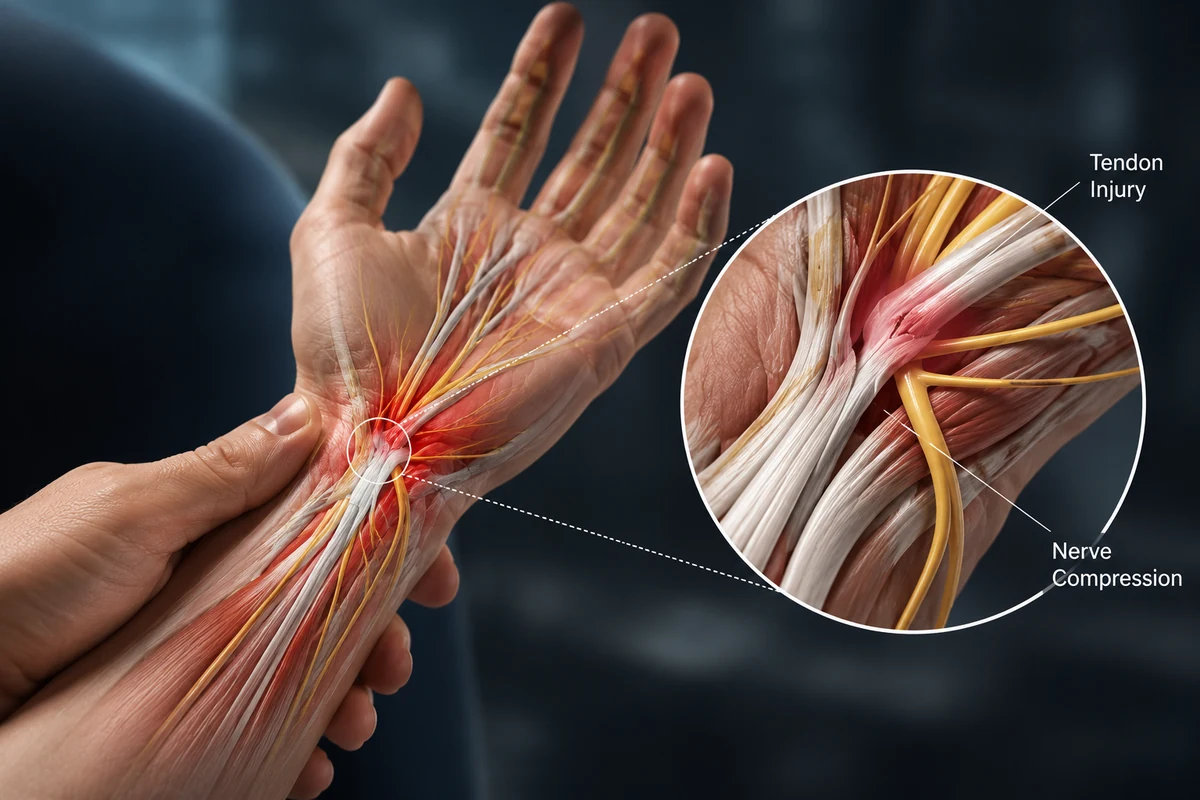 03
03Palm-side cuts or trauma causing loss of finger or thumb bending.
Explore treatment guide ↗ 04
04Back-of-hand wounds or impacts causing loss of finger straightening.
Explore treatment guide ↗ 05
05A drooping fingertip after a sports injury, jam or tendon avulsion.
Explore treatment guide ↗ 06
06A bent middle joint and altered fingertip posture after central slip injury.
Explore treatment guide ↗07A middle finger joint that bends backwards with a bent fingertip — related to mallet finger and boutonnière imbalance.
Explore treatment guide ↗A careful examination separates tendon, pulley, joint and nerve problems and identifies when imaging or urgent repair is needed.
Which movement is painful or lost, when symptoms started and whether there was a cut or impact.
Individual tendons, pulleys, joints, sensation, circulation and strength are assessed.
X-ray, ultrasound or MRI may clarify fracture, joint alignment, tendon continuity or another diagnosis.
The plan balances symptom relief, protection, movement, work demands and the risk of delay.
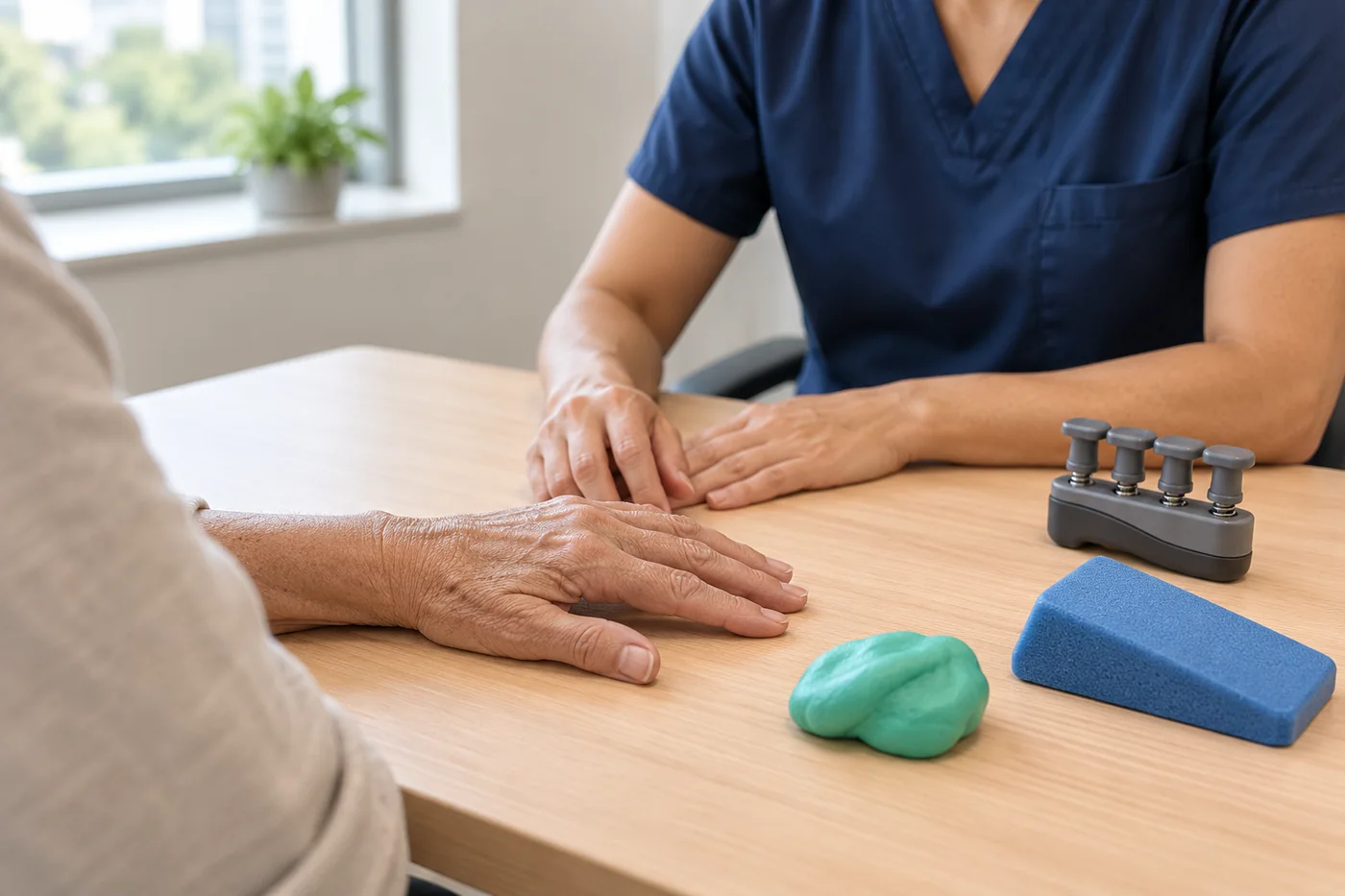
Surgery is not automatic. Splinting, hand therapy, activity changes and injection may help selected conditions, while complete tendon cuts and unstable injuries often need repair.
General information only. Diagnosis and treatment should be based on an individual specialist assessment.
No. Many problems improve with splinting, activity modification, therapy, pain relief or injection. Complete tendon lacerations and selected unstable injuries may require surgery.
Open cuts, inability to bend or straighten a finger, loss of feeling, severe contamination or circulation changes should be assessed urgently.
Severe trigger finger can become fixed. Early assessment helps determine whether splinting, injection or release is most appropriate.
The repair remains vulnerable for weeks and often takes around three months to regain substantial strength. The exact programme depends on the tendon and injury zone.
Dr Arshad sees private patients at The Highfield Hospital, Manchester Road, Rochdale OL11 4LZ — within easy reach of Manchester, Oldham, Bury, Bolton and the wider North West. You can book online through Circle Health Group, call +44 7443 213645, or send an enquiry and the team will help.
Request a specialist hand and wrist assessment and bring previous imaging, reports, splints or treatment information.