
Firm palm nodule
A small lump may be the first sign.
A firm palm nodule or cord can gradually pull one or more fingers toward the palm. Assessment focuses on how much extension has been lost, which joints are involved and whether the contracture is interfering with washing, gloves, pockets, work or sport.
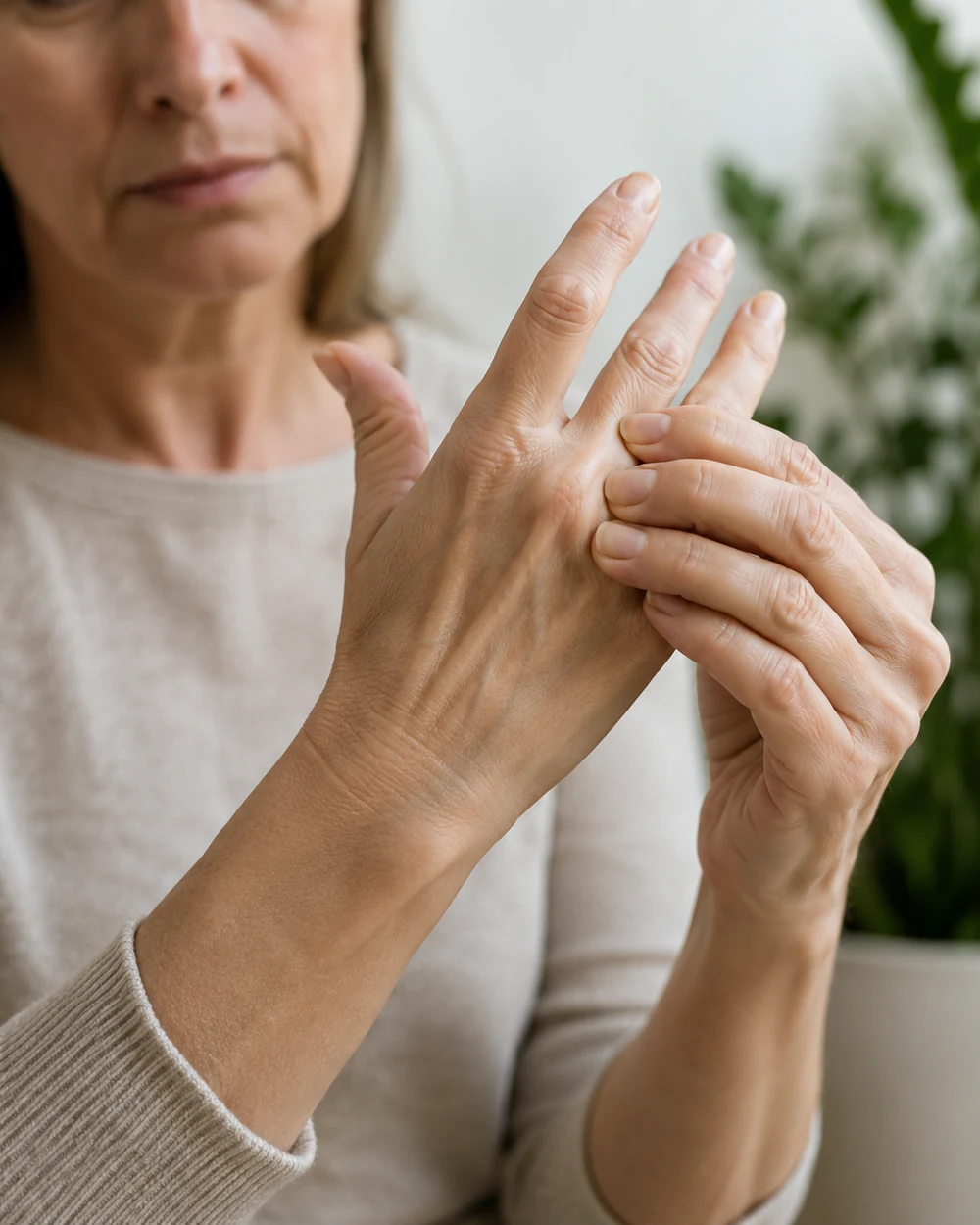
Thickening and shortening of the palmar fascia beneath the skin.
No. Dupuytren’s is a benign fibrous condition.
When contracture affects function or reaches a degree where intervention is appropriate.
Yes. Recurrence or extension can occur after any treatment.
Dupuytren’s disease affects the palmar fascia, producing nodules and cords that can bend fingers toward the palm. It most often involves the ring and little fingers but can affect other digits.
The disease is usually painless and progresses at different rates. A nodule alone does not automatically require treatment; the key issue is loss of extension and functional impact.
Symptoms vary with the condition, joint and duration. Persistent pain, stiffness, deformity, a growing lump or loss of function deserves specialist assessment.
A small lump may be the first sign.
A rope-like band can extend into a finger.
The hand may fail a tabletop test.
A bent finger catches during daily tasks.
The palm can become dimpled or tethered.
Extension loss may increase slowly over months or years.
A useful consultation connects the symptom pattern to the joint or tissue involved and the underlying cause—not just the label.
Family history and northern European ancestry increase risk.
It becomes more common with age and is often more severe in men.
Diabetes, smoking and heavy alcohol use are associated with the condition.
The exact cause is not fully understood and progression is unpredictable.
Diagnosis is usually clinical. The examination records nodules, cords, joint angles, skin quality, sensation and how the contracture affects daily function.
Changes over time and family history are discussed.
Each finger and joint is measured.
Other causes of stiffness or numbness are checked.
Scans are not routinely required for straightforward Dupuytren’s disease.
Surgery is not automatic. Treatment is matched to pain, joint or tissue damage, function, medical health and the patient’s goals.
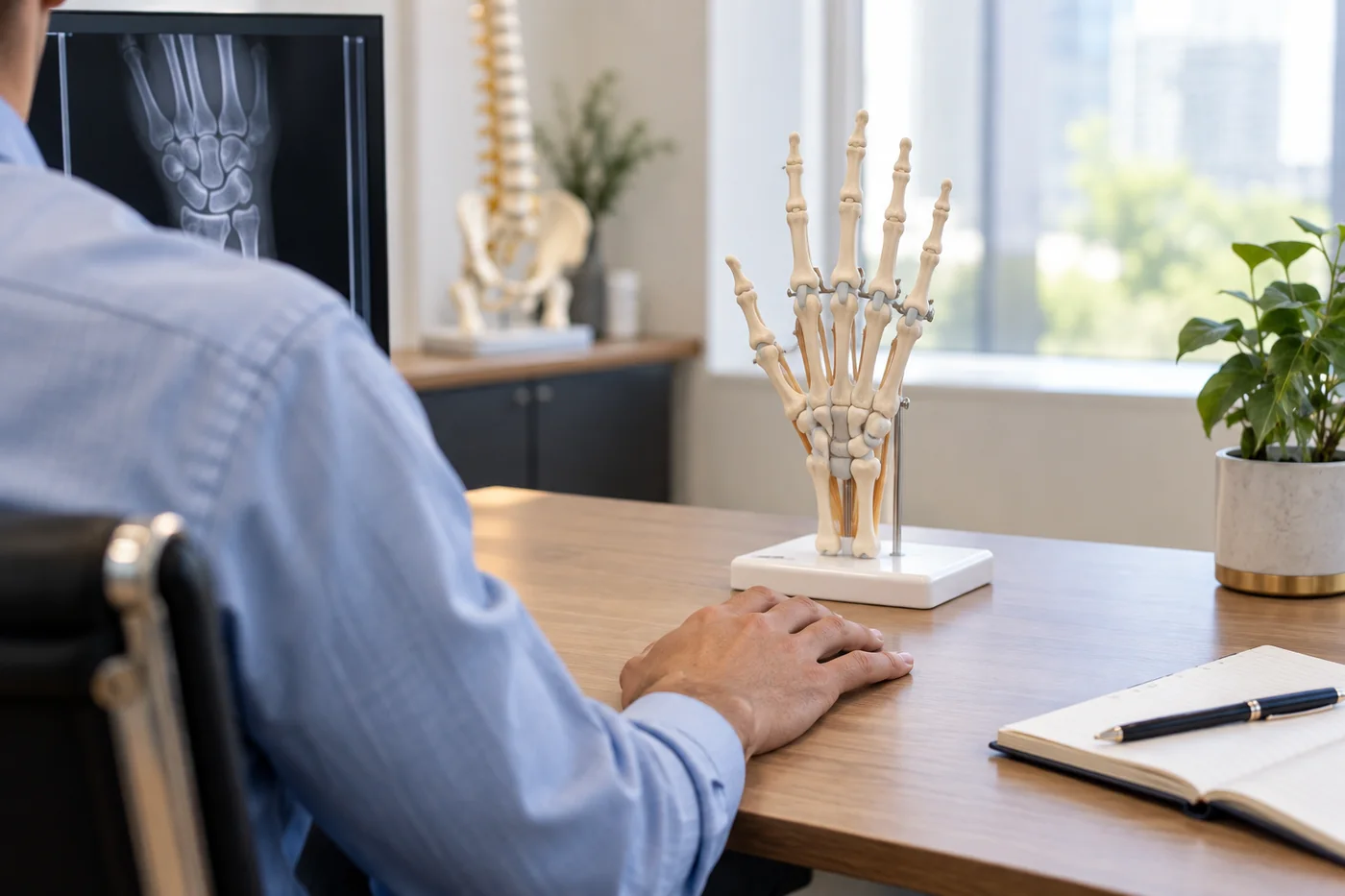
Treatment is individualised. Needle release may suit a defined cord, while open fasciectomy may be preferred for more complex, recurrent or joint-level disease.
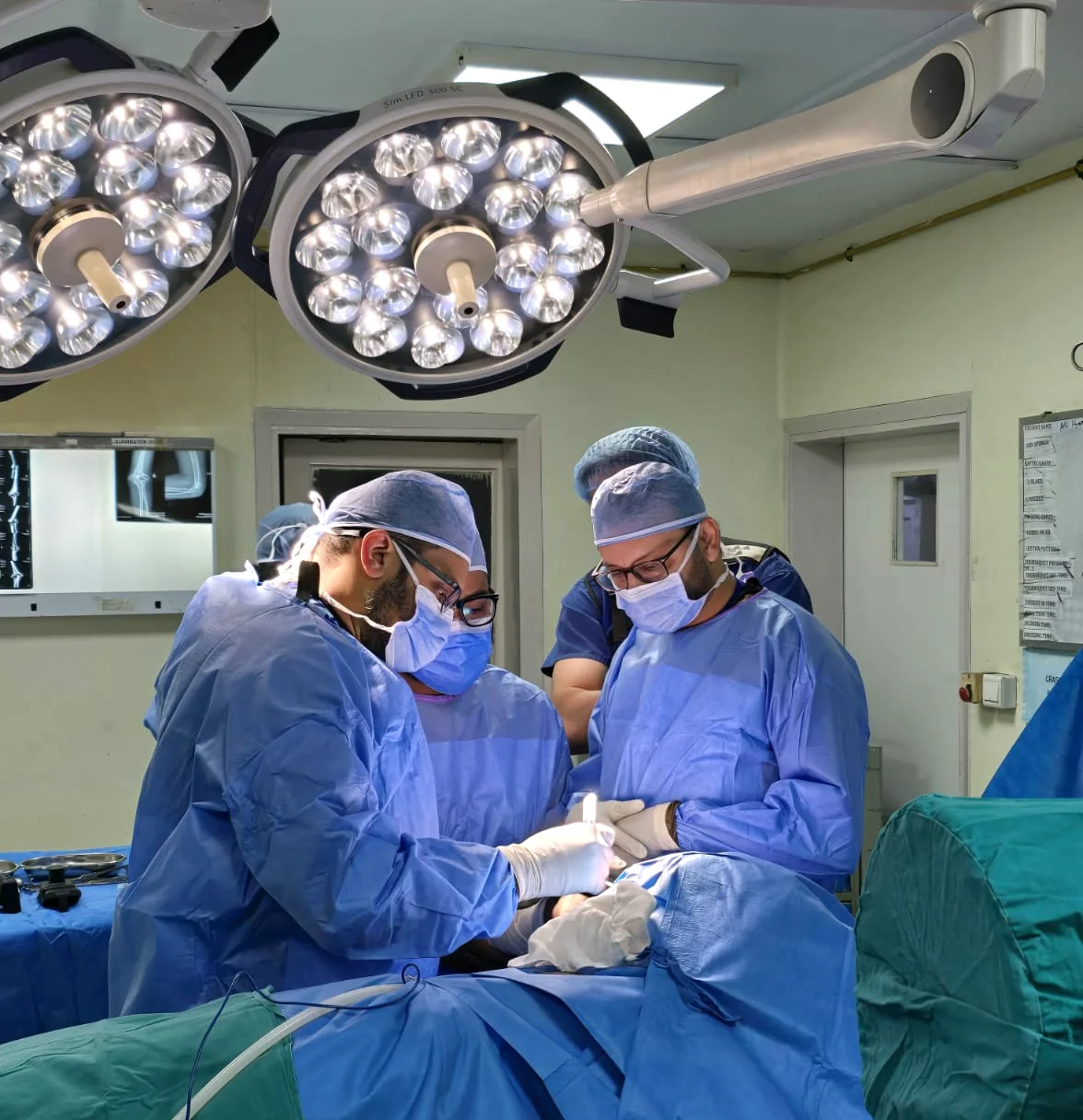
Timelines are guides only. The diagnosis, procedure, joint or tissue condition, job and medical health all influence recovery.
Elevate the hand, protect the wound and begin advised finger movement.
Wound care and hand therapy progress; recovery is usually faster after needle treatment.
Grip and daily use increase while scar and stiffness are managed.
Night splinting or therapy may continue, and recurrence is monitored.

 4.96/555 verified reviews
Dr Shoaib Arshad is a fellowship-trained consultant orthopaedic hand and wrist surgeon with UK specialist training and more than 17 years in orthopaedic surgery.
General information only. Your diagnosis and treatment plan should be based on an individual medical assessment.
No. A nodule without contracture is usually observed unless symptoms or the diagnosis are unusual.
Place the hand flat on a table. Inability to flatten the palm and fingers suggests meaningful contracture.
Recurrence varies with disease biology and procedure. More extensive surgery may last longer but involves a bigger recovery.
Therapy alone cannot remove a mature Dupuytren’s cord, but it supports movement and recovery around treatment.
Dr Arshad sees private patients at The Highfield Hospital, Manchester Road, Rochdale OL11 4LZ — within easy reach of Manchester, Oldham, Bury, Bolton and the wider North West. You can book online through Circle Health Group, call +44 7443 213645, or send an enquiry and the team will help.
Request a specialist consultation and bring any previous X-rays, scans, reports or treatment information.