Immediate wrist pain
Pain is usually worse with movement or gripping.
A distal radius fracture can follow a fall, sport injury or road accident. Prompt assessment helps identify displacement, joint involvement, nerve symptoms and whether the wrist can be treated in a cast or needs surgical fixation.
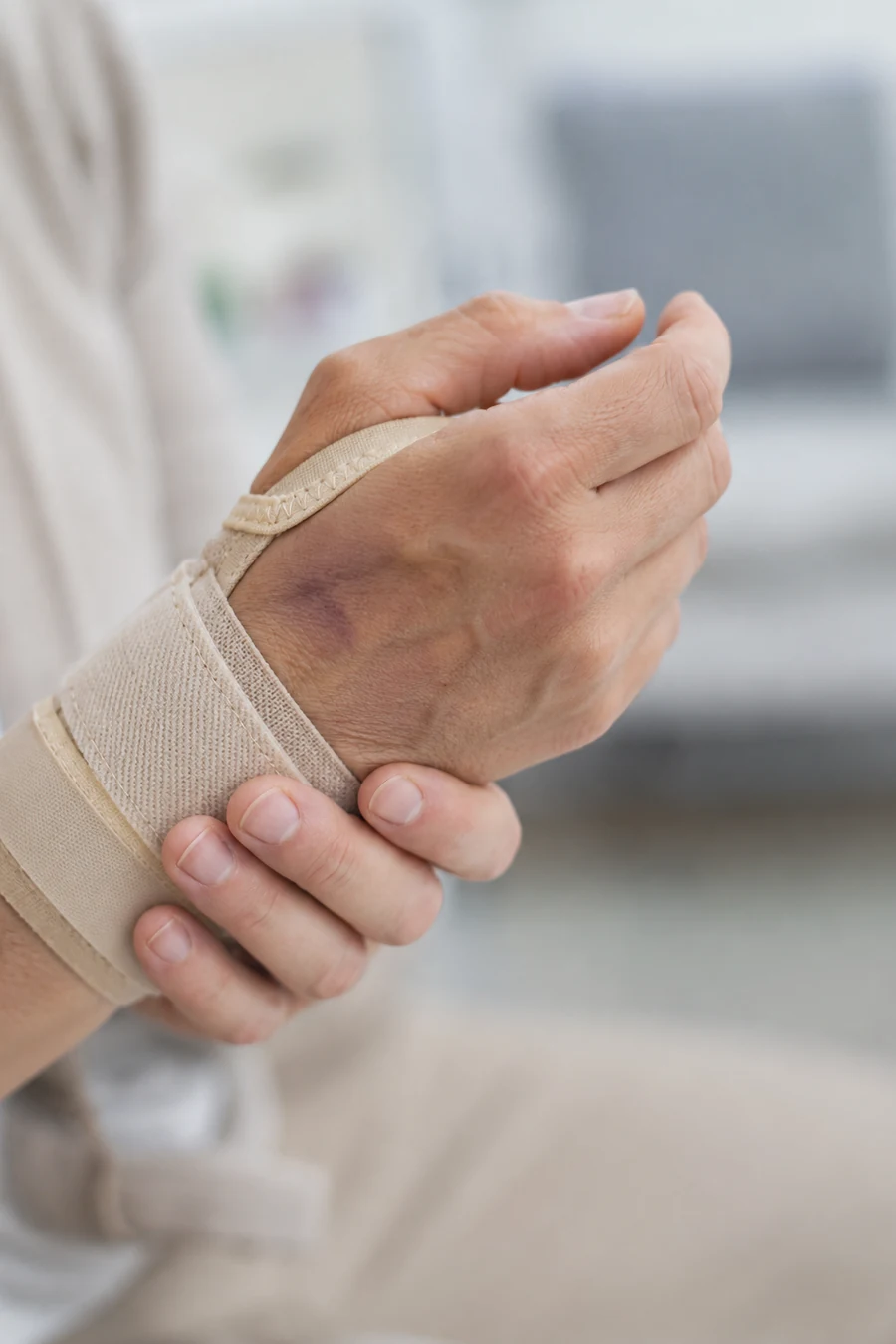
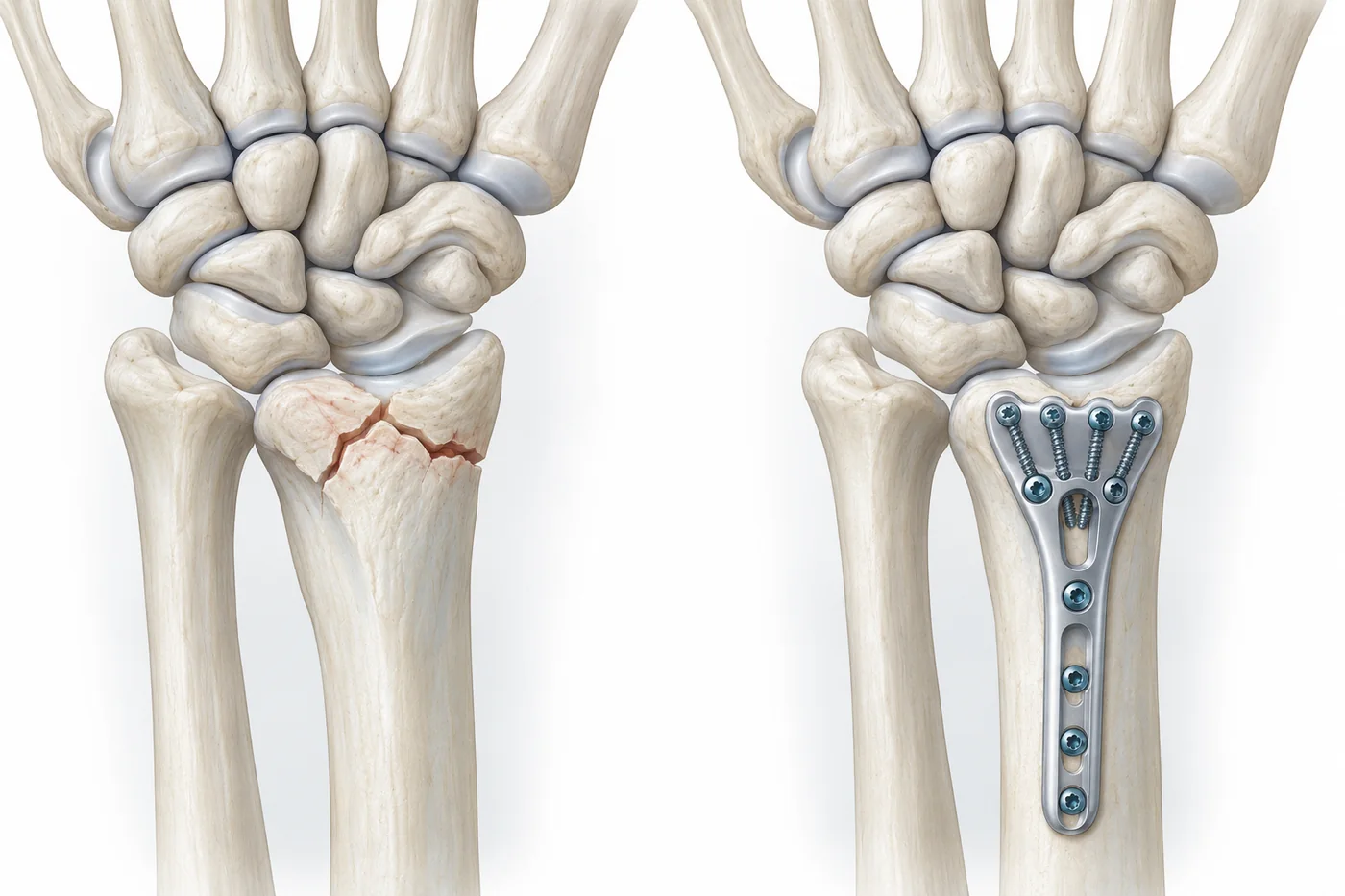
The distal radius is the end of the forearm bone beside the wrist. Fractures range from stable cracks to displaced, comminuted or joint-surface injuries. The treatment decision is based on alignment, stability, age, bone quality, hand function and patient goals.
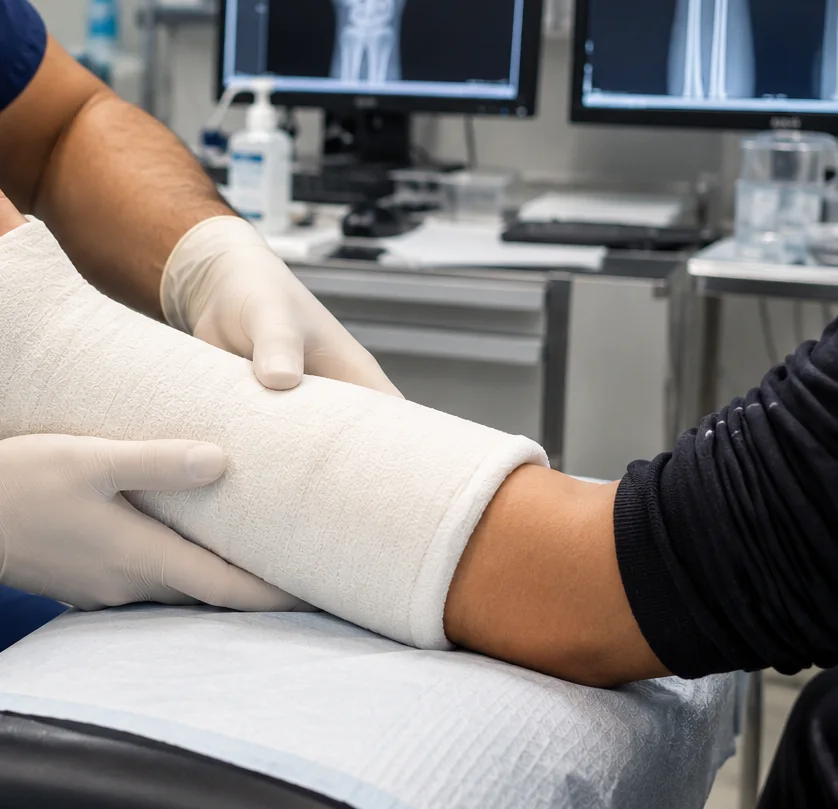
Severity varies with displacement, joint involvement and soft-tissue injury. New numbness, circulation change or an open wound needs urgent assessment.
Pain is usually worse with movement or gripping.
Swelling may develop quickly after the injury.
The wrist may look bent or shortened when fragments are displaced.
Lifting, rotating or bearing weight through the wrist becomes painful.
Numbness or tingling after injury can indicate nerve pressure.
An open fracture or circulation concern needs emergency assessment.
The mechanism helps identify likely fracture, ligament, tendon and soft-tissue patterns, but examination and imaging determine the diagnosis.
A useful diagnosis combines the injury pattern, examination and imaging that will change treatment.
Check deformity, skin, swelling, circulation, sensation and finger movement.
Show fracture location, displacement, shortening and joint involvement.
May define a complex joint-surface fracture or support surgical planning.
Repeat imaging checks whether alignment has been restored and maintained.
The right plan depends on the exact injury, alignment, stability, joint surface, skin and patient priorities.
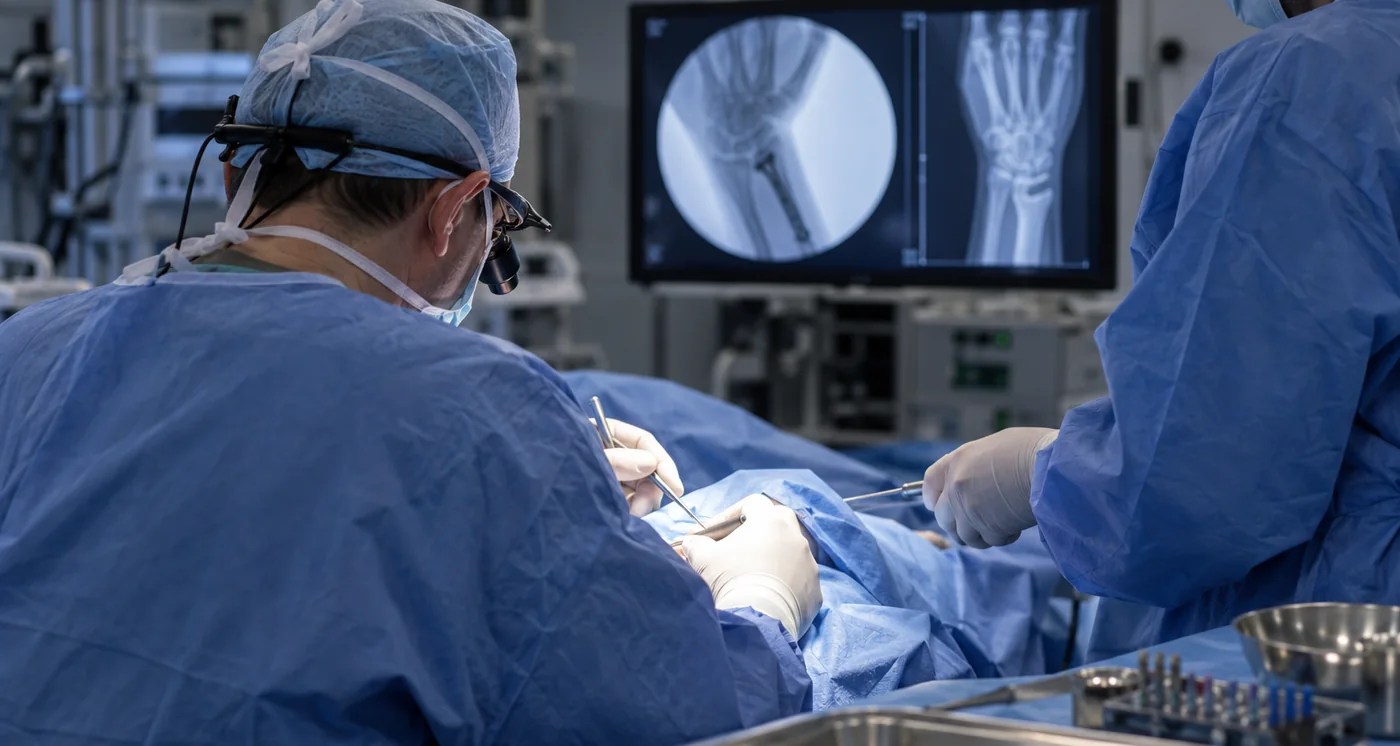
Surgery may be discussed when the fracture cannot be aligned or kept aligned in a cast, when the joint surface is significantly displaced, or when associated injuries change the treatment plan.
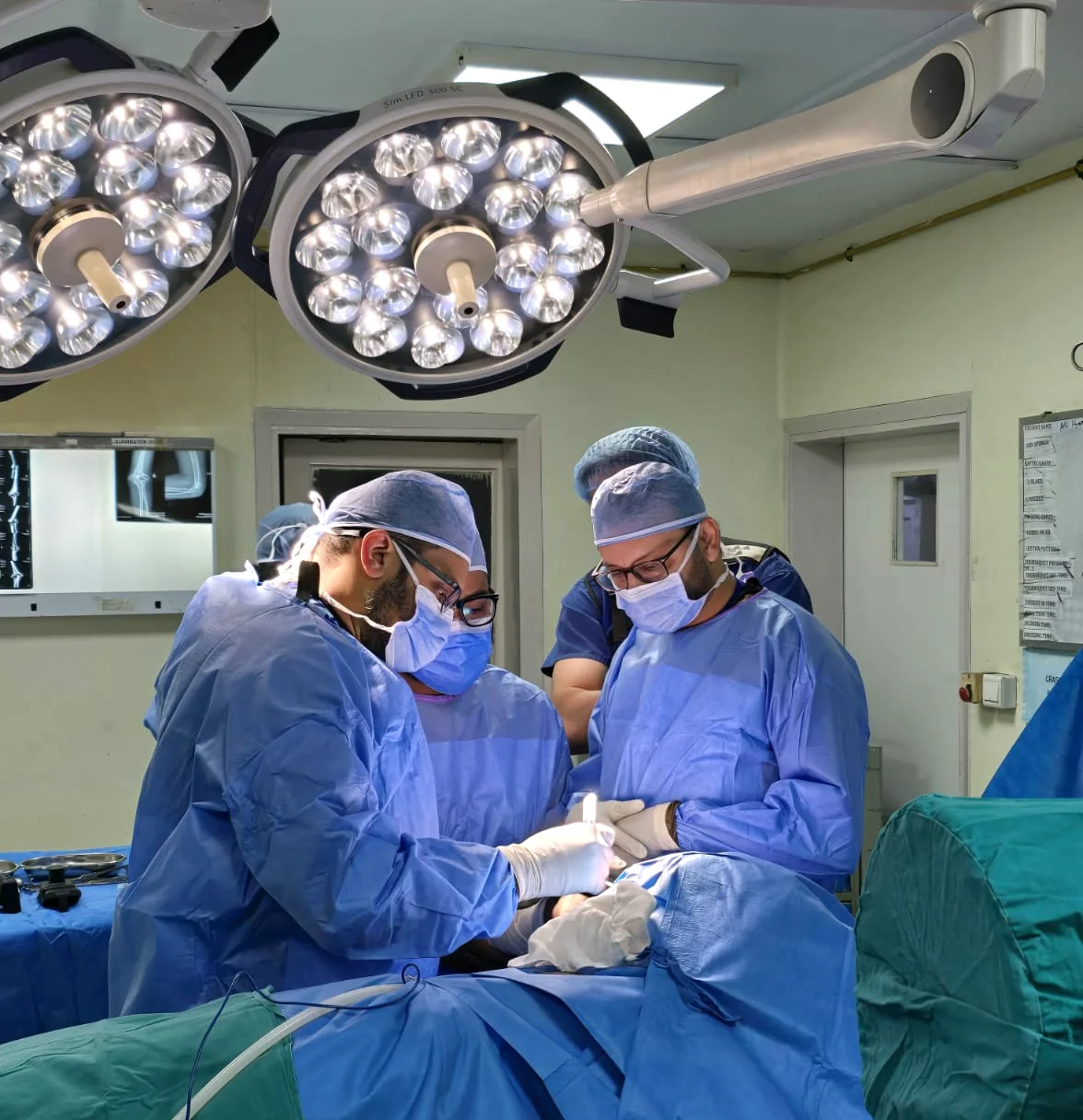
These are broad guides only. Imaging, fracture stability, tissue repair and work or sport demands determine the individual timeline.
Elevation, finger movement, splint or cast care and pain control.
Wound or cast review; alignment may be checked with X-ray.
Fracture healing is reviewed and wrist movement may progress.
Strength, rotation and confidence improve gradually; stiffness may persist longer.

 4.96/555 verified reviews
Dr Shoaib Arshad is a fellowship-trained consultant orthopaedic hand and wrist surgeon with UK specialist training and more than 17 years in orthopaedic surgery.
General information only. Acute injuries and treatment decisions require individual medical assessment.
No. Stable or acceptably aligned fractures can often be treated in a cast. Surgery is considered when alignment, stability, joint involvement or patient needs make fixation more suitable.
New numbness, increasing pain, severe swelling, pale or cold fingers, or an overly tight cast should be assessed urgently.
Many patients recover useful function, but swelling, stiffness or reduced motion may persist, especially after complex joint injuries.
This depends on the side injured, fracture stability, treatment, pain, grip and the demands of your work. Your surgeon should give individual advice.
Dr Arshad sees private patients at The Highfield Hospital, Manchester Road, Rochdale OL11 4LZ — within easy reach of Manchester, Oldham, Bury, Bolton and the wider North West. You can book online through Circle Health Group, call +44 7443 213645, or send an enquiry and the team will help.
Request a specialist consultation and bring emergency records, X-rays, scans, reports and current splint or cast information.